
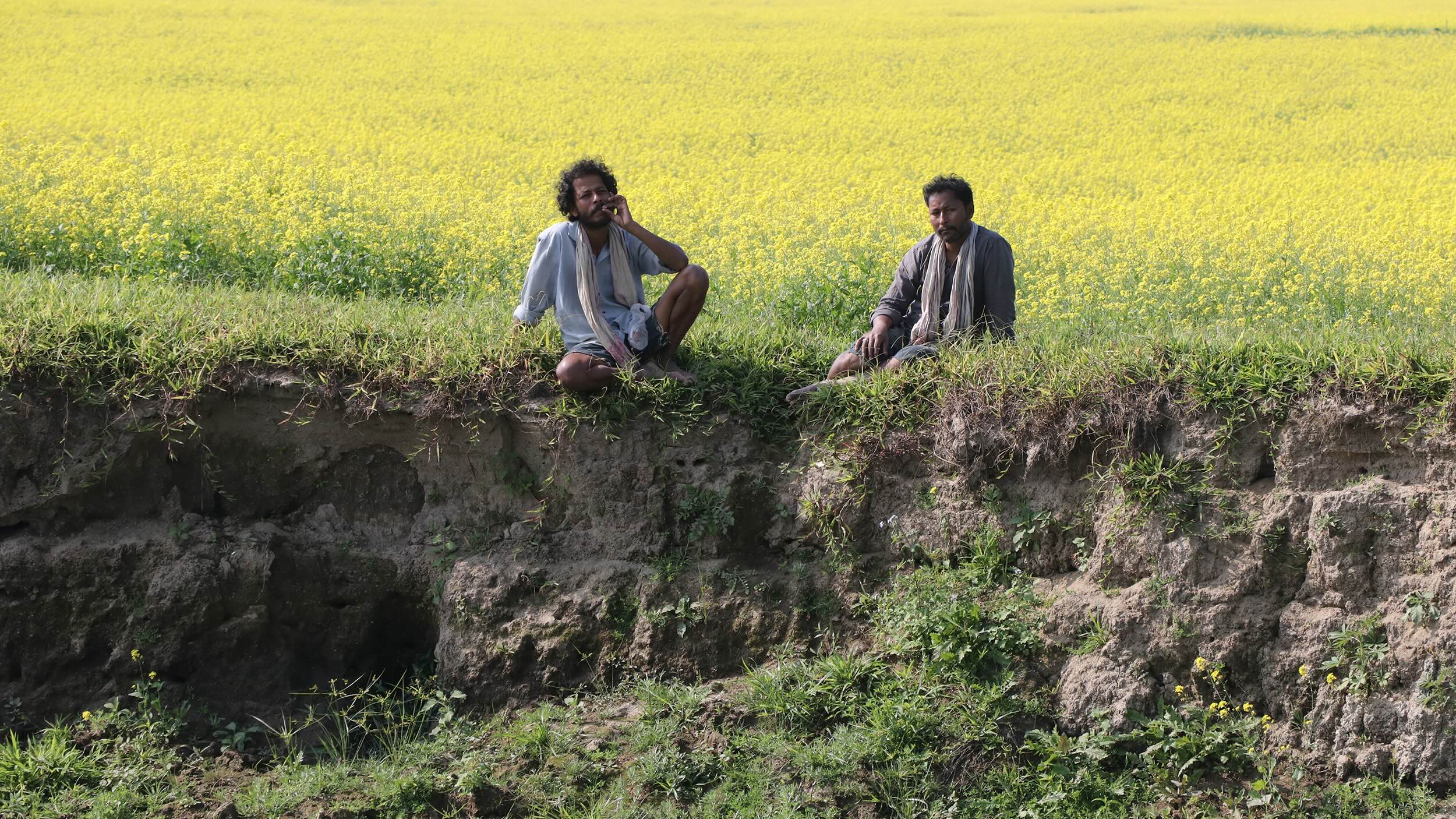
Pankaj Borah’s debut Assamese feature film, Noi Kotha (River Tales), tells the story of Tilou, a fisherman whose life revolves around the Ratuwa River in Assam. But as the water slowly recedes and fishing becomes increasingly difficult, the film explores what it means for an entire community to lose not just its livelihood, but also its traditions, memories and sense of belonging. Rather than framing the story as an explicit political critique, Borah allows the politics to emerge organically through the everyday experiences of ordinary people. In doing so, he reveals how government decisions quietly reshape lives on the ground.
Noi Kotha premiered at the 25th Annual New York Asian Film Festival, where it was the only Indian film selected for the 2026 edition. In this interview, Borah talks about the origins of his movie, working with actors and the pressing issue of migration in rural Assam.
Noi Kotha Interview: Related — An Interview with ‘Powai’ Filmmaker Kuldip Patel

Dipankar Sarkar: As an associate professor of political science, you’ve built your career in academia. How did filmmaking enter your life, and did your academic background influence your journey into cinema?
Pankaj Borah: Absolutely. My academics have deeply influenced my filmmaking. As both a teacher and a researcher, I am deeply interested in examining how social, economic and political structures influence everyday life. Filmmaking extends this engagement by offering a humanistic and affective medium to explore issues of marginalization, social justice, sustainability and human dignity. Through cinema, I seek to translate academic [inquiries] into narratives that foster critical reflection.
Noi Kotha Interview: Related — An Interview with ‘I, Poppy’ Filmmaker Vivek Chaudhary
DS: How did you come across the people living along the Ratuwa River, and what made you feel their story needed to be told?
PB: The story emerged from years of observation and engagement with riverine communities. To me, the Ratuwa River is not merely a geographical entity but a socioeconomic and cultural landscape shaped by generations of collective memory and lived experience. I witnessed how livelihoods dependent on common riverine resources are increasingly threatened by the depletion of the commons, state intervention in resource access, environmental degradation, declining fish stocks and growing economic insecurity. Alongside the material hardship, what moved me was the gradual erosion of a unique sociocultural ecosystem, indigenous knowledge and an identity intrinsically connected to the river.
Noi Kotha Interview: Related — Interview with ‘Boroxun’ Filmmaker Krrishna Kt Borah
DS: How much research did you do before writing Noi Kotha?
PB: The research was extensive and continued over several years. I spent time visiting fishing villages, speaking with fishermen, women, elders and young people. I observed their daily routines, festivals, work patterns and the gradual changes affecting their lives. Rather than relying only on statistics or reports, I wanted to understand their emotional landscape — their hopes, fears and resilience.
Noi Kotha Interview: Related — An Interview with ‘Whispers of the Mountains’ Filmmaker Jigar Nagda
DS: Noi Kotha shows people leaving their village in search of work, and suggests they’re leaving behind a way of life and a sense of identity. Was that one of the central ideas you wanted to explore?
PB: Yes, very much so. Migration in the film is not merely a question of economic survival. It also signifies the erosion of cultural roots, collective memory and social identity. When people are compelled to leave their homeland, they do not simply relocate geographically. They leave behind their traditions, community networks, indigenous knowledge systems and a way of life that has evolved over generations. While migration forms an important narrative thread, the film situates it within the broader dynamics of development. It examines migration as one of the consequences of contemporary development processes. In doing so, it draws attention to the human cost of development, the precarious status of indigenous and customary property rights, displacement from traditional livelihoods and the ecological transformations that profoundly reshape people’s relationship with their environment.
Noi Kotha Interview: Related — An Interview With ‘Tales from Our Childhood’ Director Mukul Haloi
DS: The film is centered on an ordinary fisherman trying to hold his family together. What made you choose his perspective to tell this story?
PB: I believe extraordinary truths often emerge through ordinary lives. Tilou represents thousands of people who are rarely seen or heard. He is not a hero; he is simply a man trying to protect his family while watching his world slowly disappear. I think his perspective allows the audience to experience larger socioeconomic and environmental issues through intimate human emotions.
Noi Kotha Interview: Related — An Interview with ‘Secret of a Mountain Serpent’ Filmmaker Nidhi Saxena

DS: Tilou’s anger builds slowly throughout Noi Kotha and impacts his relationship with his wife, Basanti, as their situation becomes more difficult. What did you want that relationship to say about life under constant pressure?
PB: Yes, the film suggests that prolonged economic hardship places immense strain on Tilou and Basanti’s relationship. Financial insecurity, uncertainty and the pressures of survival inevitably generate frustration and emotional distance, particularly in Tilou, whose frustration gradually intensifies. However, the film also emphasizes resilience rather than despair. Despite these challenges, Tilou and Basanti continue to support one another with compassion, dignity and a shared commitment to their family. Their relationship reflects the capacity of ordinary people to preserve care, mutual respect, hope and resistance, even under persistent structural and economic pressures.
Noi Kotha Interview: Related — An Interview with ‘Early Days’ Filmmaker Priyankar Patra
DS: Noi Kotha has a very natural visual style, and the framing never feels forced or showy. How did you and cinematographer Chida Bora work together to arrive at that look?
PB: From the beginning, Chida Bora and I agreed that the river itself should become a character in the film. We avoided overly stylized compositions because we wanted audiences to feel as though they were living alongside these people rather than observing them from a distance. We relied heavily on natural light, authentic locations and patient observation.
Noi Kotha Interview: Related — An Interview with ‘White Snow’ Filmmaker Praveen Morchhale
DS: Raju Roy as Tilou and Meghali Kalita as Basanti deliver wonderfully restrained performances. They rely on subtle expressions and quiet moments to convey deep emotion. How did you work with them to develop these characters?
PB: Both Raju Roy and Meghali Kalita dedicated themselves wholeheartedly to understanding their characters. Before filming began, we spent considerable time discussing their backgrounds, relationships and emotional journeys. To prepare for their roles, they underwent intensive practical training, including swimming, boating and fishing on the Ratuwa and Brahmaputra rivers. They also stayed at the shooting location for nearly 20 days before production commenced.
Noi Kotha Interview: Related — An Interview with ‘Mayilaa’ Filmmaker Semmalar Annam
DS: An international premiere at the 25th Annual New York Asian Film Festival is a significant achievement. What does this recognition mean to you, and do you think it will help the film find a wider audience and support its theatrical release in Assam?
PB: Premiering at the 25th Annual New York Asian Film Festival is a deeply humbling honor. It demonstrates that stories rooted in local realities can resonate across cultures. The recognition gives visibility not only to the film, but also to Assamese cinema and the peoples whose lives inspired it. I sincerely hope this international platform encourages more people to watch the film in theatres when it releases in Assam.
Noi Kotha Interview: Related — An Interview with ‘Pinch’ Filmmaker and Actress Uttera Singh
DS: What do you hope audiences take away from Noi Kotha?
PB: I hope audiences leave the theatre with a deeper sense of empathy and critical reflection. Beyond its human story, the film invites viewers to engage with broader questions concerning the human cost of development, indigenous property rights, displacement and environmental change, while recognizing the cultural and ecological significance of riverine communities. If the film encourages such reflection, I will consider it to have fulfilled its purpose.
Dipankar Sarkar (@Dipankar_Tezpur) is a Rotten Tomatoes-approved film critic based in India. As a freelancer, he regularly contributes to various Indian publications on cinema-related topics.
Noi Kotha Interview: Related — An Interview with ‘Gondhal’ Filmmaker Santosh Davakhar
You must be logged in to post a comment.