
Vague Visages’ Woche der Kritik essay contains spoilers. This articles covers Loynes (2025) and Turgaud (2026). Check out more VV film essays at the home page.
There have always been some unexpected surprises at Woche der Kritik. This year, fun genre-benders such as Loynes (2025) and Turgaud (2026) stood out by reinventing tired tropes. For the former film, it’s the Kafkaesque nature of how people in the Western world interpret “democracy” and “justice.” For the latter, it’s the brute and stern execution of a criminal enterprise. In one, motive and objective is purposefully obscured and thrown into disarray; in the second, every decision and action is clean cut and direct.
The trial at the center of Dorian Jesper’s Loynes takes absurdity to the ultimate limit. The filmmaker drops viewers into the midst of a trial where many local residents have gathered to witness, represent and judge. What’s immediately noticeable is the complete disorganization of a courtroom auditorium and people who look like they dressed themselves in the dark. What kicks the trial into a realm of total nonsense is the defendant. Unlike Franz Kafka’s The Trial (1925), where the offense itself is unknown, Loynes’ crime is anonymous, along with the defendant — a corpse fully wrapped in a white sheet. The cacophony of voices that yell, plead, laugh and murmur in the film’s singular disheveled location turn the trial into a surreal display of yelling into the void.
Woche der Kritik Essay: Related — Berlin Critics’ Week: Woche der Kritik 2026 — Try Outs, Simulations and Performance

There’s only one significant joke in Loynes, which is why Jesper’s latest production works as a short film. The director and co-writer (in collaboration with Raphaël Meyer) shift from character confusion to grand reveals that double-down on the shenanigans. The camera glides over rows and rows of random viewers, whose gawdy clothes, hairpieces and yelling slowly blend into each other. While the movie’s art direction is ostensibly old-fashioned, one can consider its conceit utterly modern — a metaphor for the internet. The unrestrained orchestra of perspectives, all from blind viewers who have little to no information, makes the concept of opinion itself meaningless. Loynes quickly devolves into a montage of gestures; a self-questioning absurdity that never has an answer.
Woche der Kritik Essay: Related — Review: Ulrich Köhler’s ‘Gavagai’
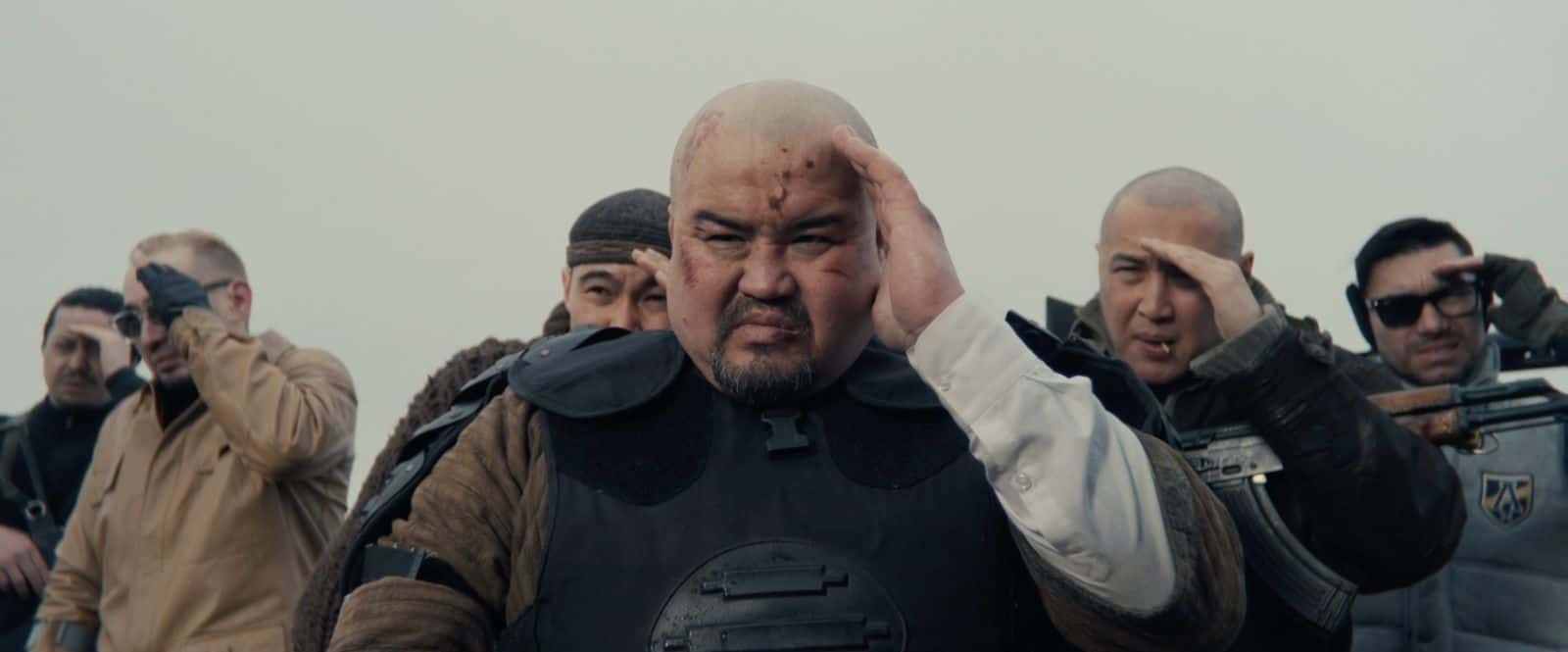
Adilkhan Yerzhanov’s Turgaud features all the elements of a classic action thriller. There’s the brooding central figure with a dark and violent past who excels at killing. There’s a ruthless and immoral clan boss, ready to slaughter anyone who stands before them (and surrounded by a usual suspect lineup of bulky and irritable henchmen). There’s the mysterious woman assassin hiding in the shadows and waiting for her moment to strike. Yet, these ingredients don’t work towards some kind of crescendo the way they almost certainly would in a Hollywood film. Instead, Yerzhanov stages the loose parts as functional on their own.
Woche der Kritik Essay: Related — Review: Rebecca Zlotowski’s ‘A Private Life’

The flat and barren landscapes of Kazakhstan make Turgaud’s action sequences feel geographically empty. Like Sergio Leone’s 1968 classic Once Upon a Time in the West, the bombast is replaced with quiet posturing and careful editing that makes it seem like, despite the desolation and clear sight of horizons, characters seemingly materialize out of nowhere. There’s a sharp difference when compared to action movies that prioritize the positioning of warring parties. In a similar distortion of genre tropes, much of the actual killing takes place off screen, which makes the violence even more shocking. All in all, Turgaud is a memorable thriller that engineers its disparate parts for a cool and sharp ride through Kazhakhstan’s criminal underworld.
Soham Gadre (@SohamGadre) is a writer/filmmaker based in Washington, D.C. He has contributed to publications such as Bustle, Frameland and Film Inquiry. Soham is currently in production for his first short film. All of his film and writing work can be found at extrasensoryfilms.com.
Woche der Kritik Essay: Related — Berlin Critics’ Week: Replacing the Beauty of an Image with the Clarity of a Message
Categories: 2020s, 2026 Film Essays, Comedy, Drama, Featured, Film, Movies, Mystery, Short Films
You must be logged in to post a comment.