

At first blush, Cotton Comes to Harlem may not seem like a traditional noir production. But over time, the 1970 film has become one of the most vivid examples of the genre being inclusive. And it came right on time for those who were Black in America to see another side of their world represented in such a bold way.
Cotton Comes to Harlem, inspired by the book of the same name by famed Black author and expatriate
Chester Himes, starts out with a rally held in Harlem by Reverend Deke O’Malley (Calvin Lockhart) to raise money for a “Back to Africa” movement cruise ship he calls “Black Beauty.” The event is overseen by two New York Police Department detectives, “Grave Digger” Jones (Godfrey Cambridge) and “Coffin” Ed Johnson (Raymond St. Jacques). The rally is disrupted by several masked gunmen who hop out of a meat truck and steal all of the proceeds totaling $87,000 from an armored car. While the detectives give chase, a bale of cotton falls out. Uncle Budd (Redd Foxx), a scavenger, finds the cotton and winds up selling it to a junk dealer but later buys it back. As Gravedigger and Ed investigate the murder of one of O’Malley’s men, they find out that he’s a charlatan con man aided by his sultry paramour Iris (Judy Pace), and that the $87,000 was hidden in the bale of cotton that fell from the car. The two cops search for the money as well as the whereabouts of Uncle Budd, who has gone missing while navigating the streets of Harlem.
More by Christopher Smith: How Seijun Suzuki’s ‘Take Aim at the Police Van’ Subverts the Vigilante Subgenre

Cotton Comes to Harlem is a strident film with a fine blend of comedy and action, made even more remarkable by the fact that it’s the directorial debut of Ossie Davis. The esteemed actor had been tapped to write an adaptation of the novel, and his work impressed producer Samuel Goldwyn, Jr. so much that he was offered a directing gig. The resulting film captures the discussions that were had in the Black community then (and which still exist today), such as how Black people live outside of the white gaze. Davis’ directing style and dialogue emphasizes each character’s personality, as Gravedigger and Ed’s banter is peppered with lines that mockingly, and sometimes patently, call out liberal paternalism.
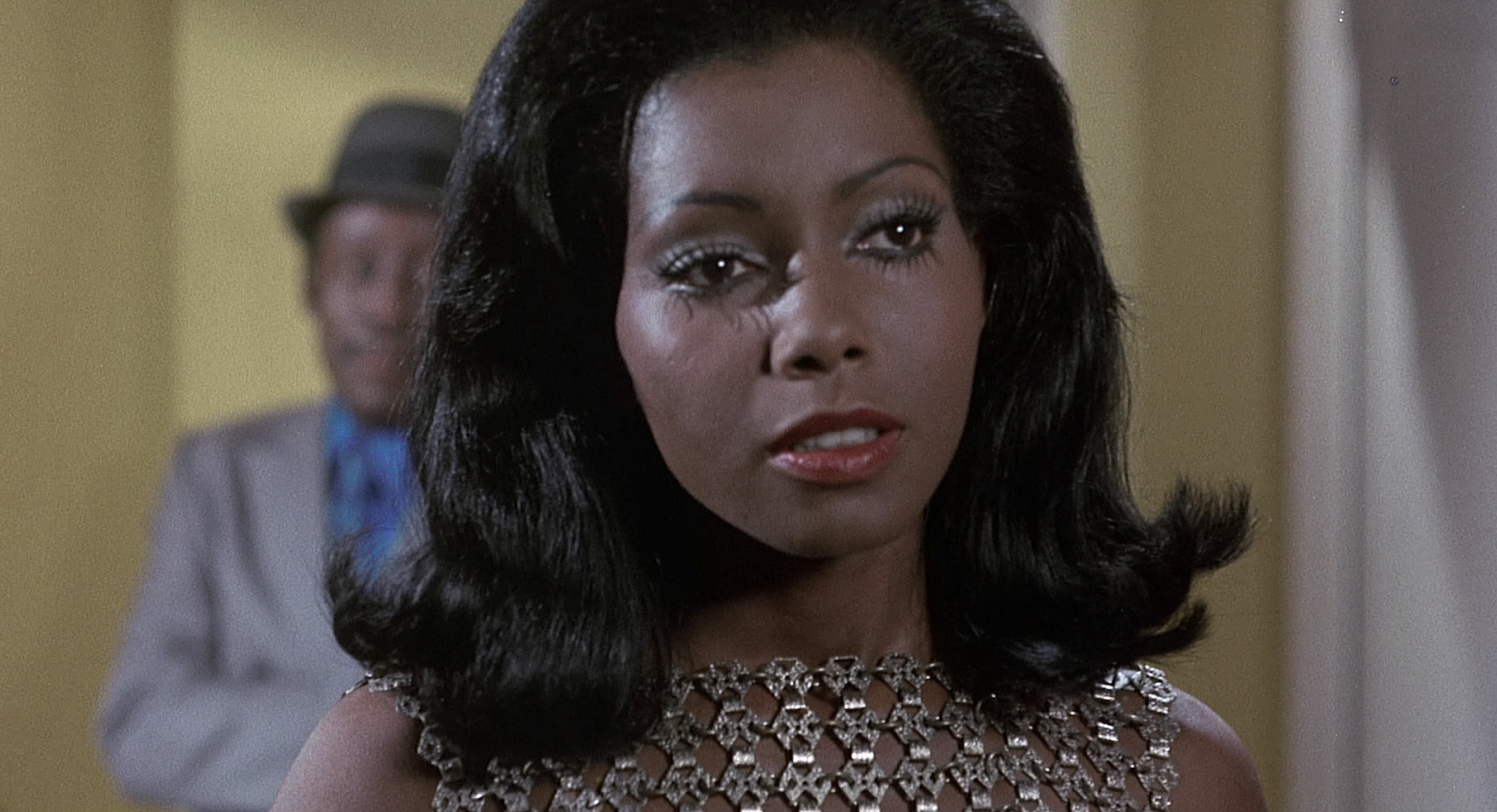
The film’s pulse lies with Gravedigger and Ed, played expertly by the two leads. They have contrasting presences, with Cambridge having a mischievous mood of bemusement throughout. His work as a highly visible comedian who wasn’t afraid of tackling the sensitive issues of race allows for some extra depth. He did the movie right after previously taking on the lead role in Melvin Van Peebles’ Watermelon Man (which, coincidentally, opened on the same day as Cotton Comes to Harlem ), playing a white man who becomes Black, wearing whiteface for the first 10 minutes of the film. In Cotton Comes to Harlem, St. Jacques’ performance as Gravedigger is stern and blunt, and with an air of coolness that could become volatile. His career to this point was like Cambridge’s with appearances on stage and TV and film, and both men thoroughly embody the anti-hero mode that neo-noir is built upon. In addition, Calvin Lockhart shows off his magnetism as the slick Deke O’Malley and serves as a proper foil by hiding his con game behind Black liberation and self-determination. As Iris, Judy Pace portrays a scintillating version of the femme fatale that the genre demands, vacillating between seductiveness and outright volatility.
More by Christopher Smith: Shattering Orientalism Through Noir: Samuel Fuller’s ‘House of Bamboo’
Neo-noir films always rely on the focal city to function as a prime character, and Harlem is brilliantly spotlighted in Davis’ film. The entirety of the production, aside from one scene, was shot in the Upper Manhattan neighborhood, mainly in the blocks around the old Filmways studio location at East 127th Street. Residents with local theatre experience got to be extras, and a community group known as the Black Citizens Patrol assisted with security in conjunction with a tactical group from the NYPD. The cinematography by Gordon Hirschfield truly captures the vibrant air of the streets, evidenced by a climactic car chase zipping through central Harlem to Riverside Drive to the historic Apollo Theater. There are also nods to past genre films throughout – Uncle Budd lives as a junk dealer near the river, which harkens back to Richard Widmark’s character in Pickup on South Street . As New York City entered a decade of decline, Harlem itself dealt with a rise of drug distribution in the streets. Cotton Comes to Harlem incorporates this community issue into the plot, but doesn’t dig deep like other neo-noir classics would years later.
In 1970, studios had an outdated view that Black people weren’t avid moviegoers, but that concept was shattered when Cotton Comes to Harlem became a financial success. United Artists ultimately approved a sequel, Come Back Charleston Blue, but Davis turned down the offer to direct, citing strong differences of opinion with executives. While Cotton Comes to Harlem isn’t regarded by critics as part of the Blaxploitation era that would dominate the 1970s, the film certainly inspired studios to seek out more Black stories. Davis’ film also created a pathway for legendary photographer Gordon Parks to film Shaft, while his son, Gordon Parks, Jr., would direct Superfly soon after. In that respect, Cotton Comes to Harlem bolstered the neo-noir genre by celebrating the idea of “Black as Cool.”
Christopher A. Smith (@infinitewords14) is a freelance writer and a New York City native. He is also an avid visitor of museums and galleries along with being a lover of different genres of cinema from independent film to classics. Find more of his writing HERE.
4 replies »