
What more can be said about Martin Scorsese? At 73, the director-producer-screenwriter-historian has a 50-year career and remains hard at work. In 2016, he’s got a big-budget movie (Silence), a new HBO show (Vinyl), and a just-announced biopic of Frank Sinatra. It comes as no surprise that these projects star male actors and focus on traditionally male issues. After all, Scorsese’s legacy revolves around masculinity and the many forms it can take. Yet, in order to fully understand the iconic director, it’s vital to look at a film which stands apart from the rest. Indeed, between the smoking guns of Mean Streets (1973) and the grimy machismo of Taxi Driver (1976), Scorsese directed Alice Doesn’t Live Here Anymore (1974), a sensitive and still-funny portrait of a woman with some very womanly concerns. Starring the effervescent Ellen Burstyn, Alice was Scorsese’s first and only film starring a female protagonist and despite seeming anomalous, it contains many of his signature themes and styles. Applied to a so-called “woman’s film,” Scorsese’s talent appears in a whole new light.
The film begins with an explicit callback to the melodramas of the studio era, reflecting its director’s willingness to play with genre. The credits appear in pink cursive over a gauzy, blue satin backdrop to Alice Faye’s schmaltzy “You’ll Never Know” playing in the background. As Scorsese said, “I loved period pieces, westerns, gangster films, and I always expressed the desire to do genre films.” An orange-tinted and highly artificial flashback to Alice’s childhood shows the young girl wandering through the Columbia sound stages. Deliberately turning the sentimental genre on its head, Scorsese cuts to the present day wherein Alice is a bored and lonely housewife. She sews, cooks, and cleans while her cantankerous husband lies in bed and yells at their son Tommy (Alfred Lutter III) for playing loud music. Here, as in many Scorsese films, music plays a central role. In addition to Tommy’s Mott the Hoople records, there are montages to T. Rex and Elton John, and Alice’s singing, sweet and tragically mediocre.

Like Jordan Belfort who pines for wealth (The Wolf of Wall Street) or Henry Hill for recognition (Goodfellas), Alice wants more out of life, too. She’s a striver, longing to sing, though suffocated by her own domestication. When her husband dies in a car accident, Scorsese utilizes the opportunity to include the film’s sole spectacle of bloodshed. His death affords Alice the chance to start over and she packs her bags and takes off for Monterey with Tommy in tow, determined to become the singer she was meant to be. Burstyn won an Oscar for the role, and she deserved it. Alice pulsates with life, veering from giddy highs to despairing lows. She’s the “fun mom” who doesn’t censor herself and isn’t above a spontaneous water fight, and at the same time, she’s a 35 year-old single mother coping with financial uncertainty, abusive boyfriends, and the sobering reality that childhood dreams might remain that way.
Alice might seem sanitized of Scorsesian violence but it’s not; the violence lies below the surface and threatens to erupt at any moment. While staying at a motel, Alice wakes up in the middle of the night to the sounds of abuse and shouting in the room next door. When she’s auditioning at a lounge, the bar owner leers at her body and tells her to turn around. Without missing a beat, Alice says, “I don’t sing with my ass.” Harvey Keitel makes a scene-stealing appearance as a charismatic cowboy with a mean streak. He flirts with Alice after one of her performances and they spend the night together. When his wife shows up at Alice’s motel room the next day, she’s not angry. She sits across from Alice and admits that her husband’s affair is causing him to miss work, which means she’s unable to pay their son’s medical bills. It’s an important moment of solidarity between two unlikely women and it’s interrupted by Keitel, who breaks through the front door, throws his wife across the room and threatens Alice with a knife. It’s classic Scorsese violence, but this time it’s portrayed in an entirely negative light. Like the strong, independent woman she is, Alice hits the road with Tommy, never to see Keitel’s character again.

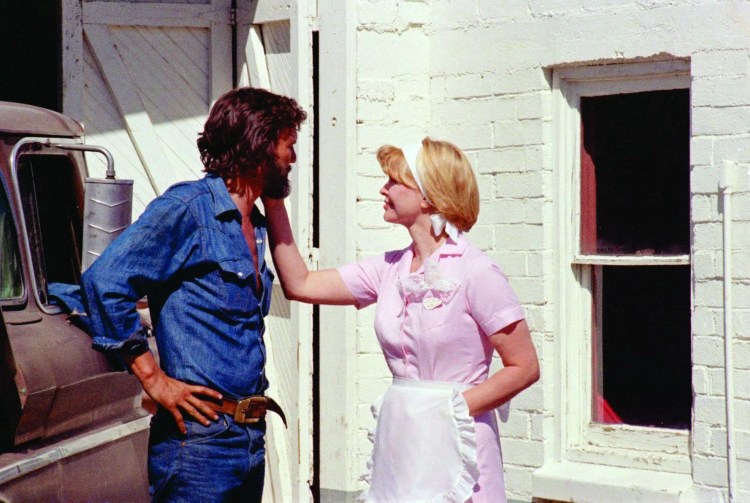
In Tucson, Alice lands a job at a diner where she meets David (Kris Kristofferson), a handsome, single farmer, and Flo (Diane Ladd), a foulmouthed waitress. Scorsese’s experimentation with genre comes back once again as he balances David and Alice’s romance, the diner’s slapstick comedy, and the ongoing melodrama of Alice’s attempt to figure her life out, once and for all. Initially, the script included the on-screen marriage of David and Alice, but as Burstyn recalled in an interview, “I said, ‘Wait a minute. Why does Alice have to end up with a man?’ So we compromised.” In a welcome burst of feminism, David offers to abandon his ranch and drive Alice to Monterey. She accepts, and in the final scene, Alice walks side-by-side not with David but with Tommy as they discuss their future on their own terms, of course.
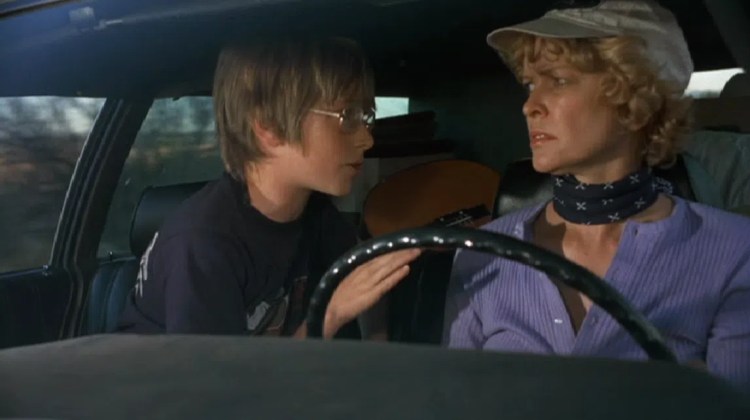
If there’s one man in Alice’s life who matters most, it’s her son, and he isn’t a throwaway character, either. Their dialogue is fast and playful and it reportedly mirrors that of Scorsese and his own mother in Italianamerican (1974), the documentary he made about his parents the same year. Yet, if Alice is a mother-son film, it’s not a typical, overly sentimental one. When Tommy keeps trying to tell the same unfunny joke, Alice turns to him and says, “You’re annoying me.” Alice often swears around Tommy and he swears back — it’s a form of bonding. As in many Scorsese films, profanity reins. He shows the way love coexists with anger; the way love means getting mad, annoyed, and yelling.
For a legendary director known more for gangsters, hookers, and tough guys, Alice Doesn’t Live Here Anymore stands as a remarkable chapter in the Scorsese canon. The director portrays the fully formed inner life of Alice with subtly and sensitivity. Whether she’s singing off-key at the piano, driving her clunky station wagon, or storming out on another crappy boyfriend, Alice is a spitfire. It’s a shame Scorsese doesn’t turn his camera toward women more often.
Erica Peplin (@ericapeplin) is a writer and editor for Spectrum Culture. She lives in New York.
Categories: 2016 Film Essays, Featured, Film Essays
You must be logged in to post a comment.