

Vague Visages’ The Return review contains minor spoilers. Uberto Pasolini’s 2024 movie features Ralph Fiennes as Odysseus, Juliette Binoche as Penelope and Charlie Plummer as Telemachus. Check out the VV home page for more film criticism, movie reviews and film essays.
Everything old is new again. Homer’s epic poem Odyssey is now the hottest property in Hollywood. While British filmmaker Christopher Nolan and an all-star cast are currently working to bring a new version of the near 3,000-year-old tale to life, Uberto Pasolini’s big screen adaptation, The Return, narrows its focus to a tragic part of the final act.
It seems safe to assume that Nolan’s The Odyssey will be a blockbuster affair in which cyclopes, storms and meddling deities are brought to life in spectacular fashion. Pasolini dispatches with all of them in The Return, along with everything else that happens in the first dozen books of Homer’s tale. In the opening sequences, the filmmaker uses nothing more than a few brief words imposed on a black screen. For context, King Odysseus (Ralph Fiennes) went off to fight many years ago, leaving behind his wife (Juliet Binoche as Penelope) and son (Charlie Plummer as Telemachus). That’s all viewers really need to know.
The Return Review: Related — Glasgow Film Festival Review: Yugo Sakamoto’s ‘Baby Assassins: Nice Days’

In fact, The Return’s opening act would probably work without introductory notes. The first glimpse of Odysseus shows him lying naked at the edge of a shore. His scarred, sinewy body tells a warrior’s tale, while his greying, ragged hair informs the audience that the character’s warring days have long since passed. The sight of a ship piece bobbing on the waves reveals that Fiennes’ protagonist arrived on the shore more by chance than design, and the desperate way he drags himself up a beach makes it clear that the shipwreck is not the first misfortune that fate has thrown his way. During a transition shot, Penelope and Telemachus gaze hopefully, or perhaps hopelessly, out to the horizon. Again, the audience doesn’t need any help interpreting the visuals.
Using striking, elemental images, The Return taps into the ancient power of Homer’s epic story. Working with a tenth of the budget that Nolan will reportedly have to play with, Pasolini uses a relatively small canvas to depict a place of austere beauty, especially when it’s lit by flickering torches and dancing campfires. And the landscape plays a powerful part in The Return, shot on location in Greece and Italy, with lush green forestry and cliffs that send water exploding into the sky as the waves crash against them. The island of Ithaca feels like a place forged in antiquity, a land where history blurs into myth.
The Return Review: Related — New Italy, Old Attitudes: Michelangelo Antonioni’s ‘Il Grido’
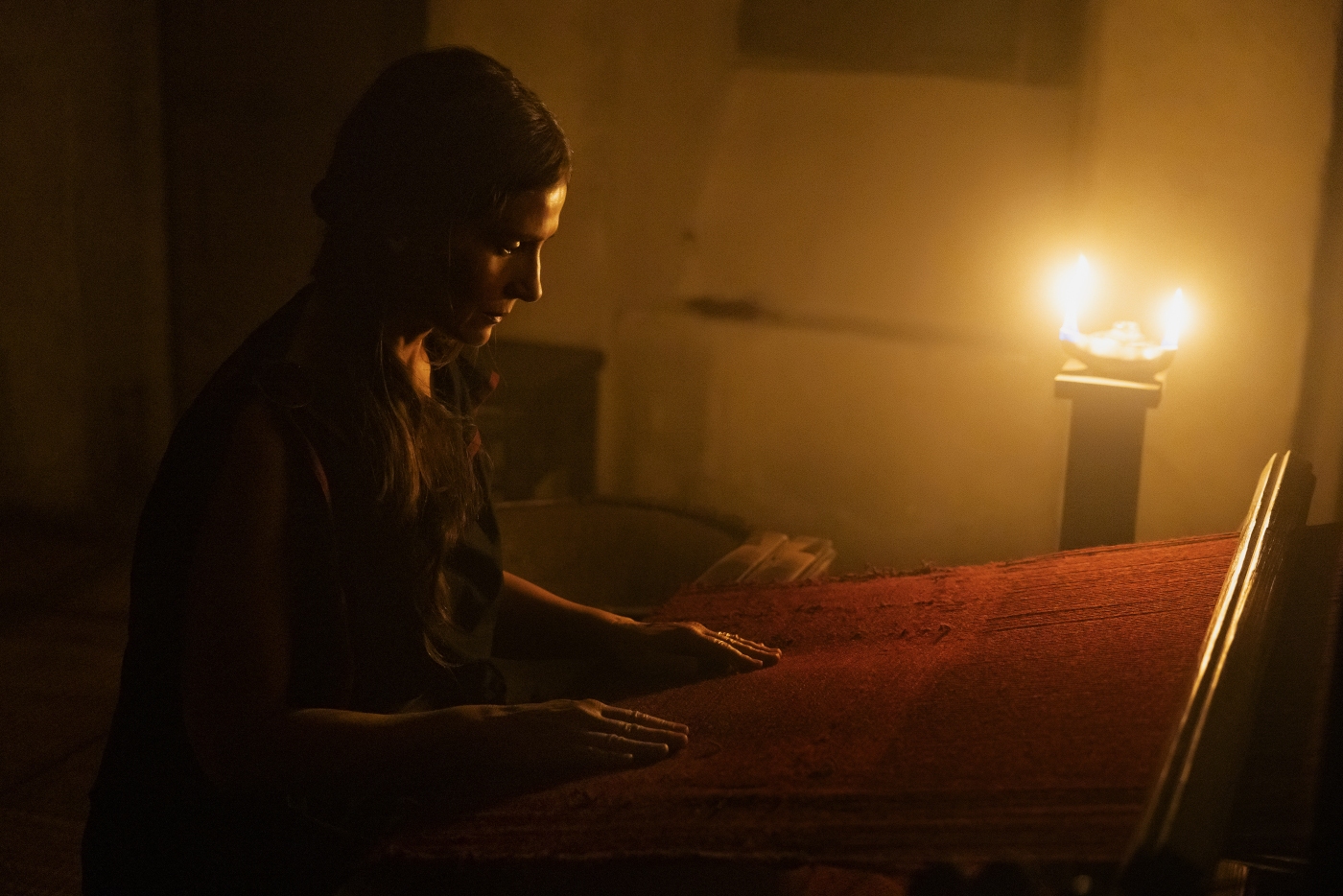
In spite of its scenery, the Ithaca that Odysseus returns to is a pretty miserable place. The island has fallen to ruin in his absence, the protagonist’s palace is overrun with drunken thugs and his wife is circled by vultures who are determined to claim her hand in marriage the moment she accepts that her first husband is no more. The crux of The Return’s story is whether Odysseus, beaten and broken by the things he did and saw during his time away, can gather the courage to return to Penelope and let her see the man he has become. If he fails to or waits too long, she will be forced into marriage with one of these opportunists, leaving both Penelope and Telemachus at the mercy of the new king.
Odysseus’ dilemma is a problem since none of his potential successors seem particularly merciful. The leading candidate, Antinous (Marwan Kenzari), likes to dress himself in soft clothing and gentle smiles, but he is soon revealed to be as violent and vindictive as any of the others pursuing Penelope. The acting amongst these suitors is a little uneven, with some noticeably stiff line-readings. And some performers struggle with the script’s (penned by Pasolini, John Collee and Edward Bond) mix of classically styled speech with modern sound design. The result leaves various cast members delivering naturalistic performances while others play their roles with theatrical and unconvincing villainy.
The Return Review: Related — Glasgow Film Festival Review: John Maclean’s ‘Tornado’
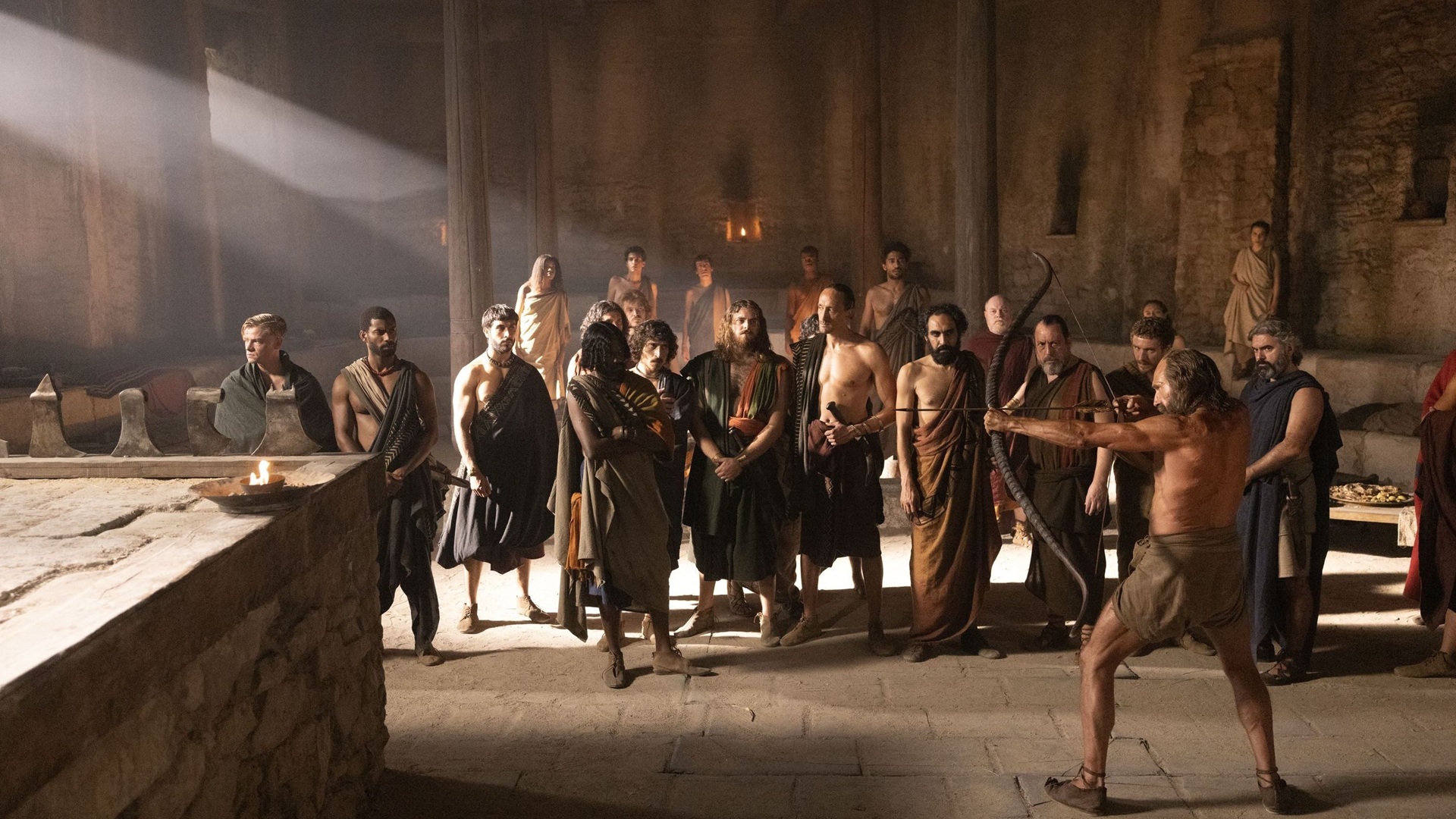
Naturally, the ever-adaptable Fiennes displays no struggles in The Return. As the Shohei Ohtani of the acting world — a performer just as comfortable playing nose-less dark lords as he is delivering Shakespearean monologues — the English actor is the film’s great strength. The harrowed version of Odysseus that Fiennes plays forces him to convey much of the character through sheer physicality — an epic poem written in his stooped posture and anguished expressions. But then there are the moments when the lead actor gets to fully come alive, like when Odysseus sits before a fire and tells a story from his soldiering days while shadows dance across his face and those brilliant, piercing eyes stare fixedly forward. And there sits the audience, in a dark room of their own, spellbound by a master storyteller. Everything old is new again.
Ross McIndoe (@OneBigWiggle) is a freelance writer based in Glasgow. Other bylines include The Skinny, Film School Rejects and Bright Wall/Dark Room.
The Return Review: Related — Review: Alice Rohrwacher’s ‘La Chimera’
You must be logged in to post a comment.