
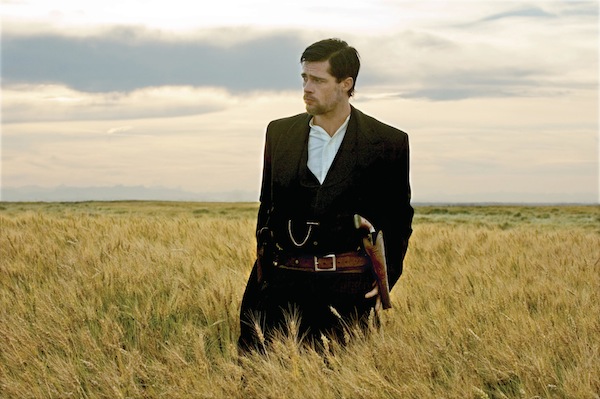
We Failed This Film is a series about various films that simply didn’t get the love that they deserved upon initial release. To open it up, we’re starting with Andrew Dominik’s 2007 masterpiece The Assassination of Jesse James by the Coward Robert Ford, a film that was initially overlooked but has now slowly gained a strong band of admirers.
How We Failed It
Dominik’s film slid under the radar since it wasn’t exactly the film that Warner Bros. envisioned when they were pitched a movie about Brad Pitt starring as Jesse James. If you’re dropping thirty million dollars on a film with that description, you’re expecting something that will easily get the box office returns — not a 160-minute, slow-paced elegy about the legend of the west with little action. You can’t be too angry with Warner Bros. for not being entirely happy with the final product, but that doesn’t change that they had something special on their hands and dumped it.
Jesse James was quietly slipped under the radar in 301 theaters during the fall of 2007. With an opening weekend of just $147,812, the film would conclude its domestic run with only $3.9 million. Despite the film doing surprisingly well overseas (an enthusiastic $11 million), Jesse James still only came in at $15 million overall — only half of its budget.
The film has always been critically admired. Roger Ebert wrote positively by noting its place in the revising of the western cinematic vision: “There are things about men, horses and horizons that are uniquely suited to the wide screen. We see that here. The Western has been mostly in hibernation since the 1970s, but now I sense it stirring in rebirth. We have a program to register the most-read reviews on my website, and for the month of September the overwhelming leader was not Eastern Promises, not Shoot ‘Em Up, not The Brave One, but 3:10 to Yuma. Now here is another Western in the classical tradition.” Wesley Morris agreed, his headline reading “’Jesse’ turns an outlaw into high art.” Mark Kermode was highly enthusiastic, declaring it as possibly the best film of the year.
Anyone who watches Jesse James will find truth in those statements, but the problem in why this film went unheard of for so long lies in the simple lack of opportunity to see it. Releasing the film on 301 screens nationwide is no way to find an audience. Despite two Oscar nominations, one can easily get the sense that the studio could have (and should have) campaigned for more screens. It should be said that box office receipts and Oscar nods aren’t large determinants of a film’s value, but the lack of those two nominally key things left it on the shelf for far too long. In the dichotomy of undervalued and overvalued films, Jesse James treads far closer to undervalued than it ever deserved.

Why It’s Great
Watching Jesse James feels like entering into an old photograph, the film paced at an elegiac rhythm to submerge the audience in this reconstructed past. Andrew Dominik uses the old west and the myths of outlaws pertained within to examine the nature of celebrity, myth and actuality. His script stays almost word-for-word to its source novel in the dialogue and narration — similarly as in Killing Them Softly — but he’s not simply copying and pasting here. He finds a way to seemingly enrich what was in Ron Hansen’s novel, bringing it to its fullest and stunningly realized self on screen.
Nick Cave and Warren Ellis create a poetic eulogy of a score in Jesse James with the solemnity of a funeral and the dreamlike wonder of the western legend. Roger Deakins contributes perhaps his finest work in this film, a Mount Everest-sized achievement in a career already filled with great feats. Each frame could be hung in a museum, his images so distinct and beautiful. The scene with the train coming towards the raiding party led by Jesse is one of the most stunningly shot sequences ever seen. Frank James (Sam Shepard) orders the lamps all turned off, and we plunge into momentary darkness until the light from the train punctures the image. Jesse’s figure is illuminated into an iconic and immortalized stance, its light and shadows dancing in the trees amongst the outlaws.
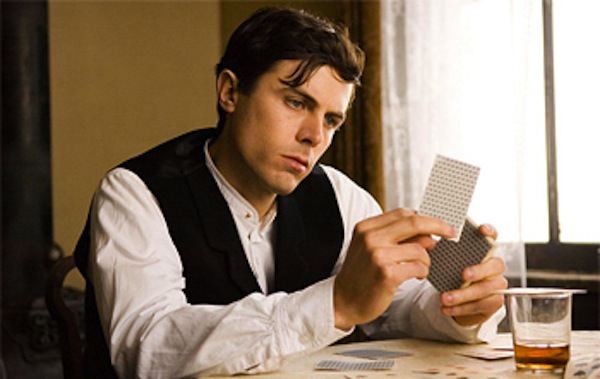
The two central performances by Brad Pitt (Jesse James) and Casey Affleck (Robert Ford) belong in the history books. Pitt gives the best performance of his great career by producing a sense of veiled sadness, seduction, paranoia and terrifying ferocity with each moment. He brings to life this iconic and mythical character, deconstructing him to his faults and insecurities, his human and mortal traits, without losing the sense of mystery that brought Jesse James his status. Casey Affleck also delivers his best work, bringing a profoundly felt sense of tragedy to Robert Ford. His innocence in how star-struck he is with Jesse grows more malicious and poisoned, turning into something of jealousy and rage.
Jesse James has one of the greatest ensembles ever seen with talents like Mary Louise Parker, Sam Shepard and Zooey Deschanel on screen for only a few minutes. Character actors like Sam Rockwell, Paul Schneider, Garret Dillahunt, Pat Healy and Michael Parks all lend their capabilities to create unforgettable performances that stick with you without distracting from the whole, and pre-fame Jeremy Renner shines in his supporting role of Jesse’s cousin Wood Hite. Even James Carville plays a role, and he does so with unexpected conviction.
The title references the assassination of Jesse James, but the subtext of the film displays a killing of the western myths, outlaws and heroes — all brought to their end by those who wish to imitate those legends ala Robert Ford. Dominik prefaces this notion earlier in the film as Robert approaches Jesse from behind while he bathes, and Jesse posits his own Shakespearean question: “Do you want to be like me, or do you want to be me?” Robert can be neither and ends up killing the one he loves in a desperate, tragic effort to be more than his hero.
That’s not to say that Jesse doesn’t cower away from death. One scene finds him looking through thin ice and asking Charley Ford (Sam Rockwell) unsettling questions about the prospects of suicide. When the “assassination” comes, Jesse seems to know it is coming and accepts it; he takes his gun-belt off and turns his back to Robert as he examines a picture in his living room. Jesse takes his place, as if he’s on the stage that Robert later reenacts the murders upon. Fear and despair cover Robert’s face until he takes his place as well, and both men are drawn to their inevitable fate.
Going Forward
Luckily, a lot of groundwork has been conducted to preserve this film’s place in history. Jamieson McGonigle has most notably spearheaded a series of revival screenings in locations across America, with Andrew Dominik, Casey Affleck, Roger Deakins and the book’s author Ron Hansen in attendance.
I interviewed McGonigle over the course of a few months in late 2013/early 2014 during the height of the revival screenings, and much of what he had to say about the film still rings true. “I considered it a masterpiece from the get-go. I knew I’d seen a classic film, an all-timer, a masterpiece, whatever you’d like to call it. The disconnect between fan/critical reception and the level of acclaim from those who loved it — and theatrical business/short life on the big screen — was so distinct that I felt the film demanded a second chance on the big screen.”
The reception at the screenings was largely positive and sparked hope that we may one day get to see the alternate and extended cuts of the film that has attained a mythical status similar to its character. Dominik’s favorite version clocks in at around 190 minutes and features a scene he calls ‘The Garden,’ which also features what he considers Pitt’s best work in the film.
The ultimate hope? Now that Jesse James has received the theatrical recognition it deserves, it’s now time that it receives a home release to match it. The alternate and extended cuts deserve to be seen. Criterion? Arrow? Somebody? We can’t let this legend die, its myth must live on.
Dylan Moses Griffin has been a cinephile for as long as he can remember. His favorite film is Taxi Driver, and he reads the works of Roger Ebert like it’s scripture. If you want, he will talk to you for 30 minutes about the chronologically weird/amazing Fast and Furious franchise.
Time has been far kinder to ‘Assassination of Jesse James’ than audiences were in 2007. I fully expect this to be mentioned as a masterpiece for years to come in its many future appearances on TCM.
A great article that does justice both to the film and the story of its release. I teach a college-level Western genre course and offer the movie as a film review assignment choice to my students – many of those who choose it are often struck by the cinematography and acting performances. I also write professionally about the genre at http://westernsreboot.com/ and did an article that list sections of film seen in trailers but not in the released version. If interested, that list can be found at:
http://westernsreboot.com/2013/01/12/behind-door2-extra-scenes-from-the-assassination-of-jesse-james-by-the-coward-robert-ford/
Like yourself, I am anxious/hopeful for a home release that provides all deleted content.
Cheers,
Chad
I think why this film is so special is because it takes its time. And there is actual character development.
From 2007, this is the James family’s own take on the film. Among Jesse James fans in touch with the family through their blog and social media, this film still ranks #1 for its historical accuracy and depiction of the James character. The recent announcement that The Criterion Collection will not be issuing a director’s cut is deeply disappointing.
http://www.ericjames.org/Reviews/AssassinationofJesseJames/index.html