
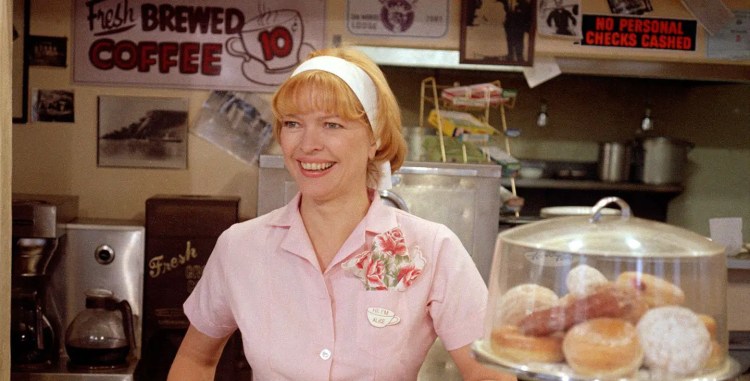
While revisiting Alice Doesn’t Live Here Anymore for the first time in over 10 years, I was struck by two realizations. First, it suddenly dawned on me that throughout his career, Martin Scorsese has most consistently been a director of character-oriented drama. While this might seem a rather obvious observation to some, it is easy to see Scorsese first as a cinema historian who makes cinema about itself, or as a versatile director of genre pictures. While these latter two attributes do inform his work, I’ve noticed with a recent slew of retrospective viewings that the auteur concerns himself always with the study of character above else. The second realization I had was that while Scorsese’s filmography has repeatedly returned to the subject of violent masculinity, Alice Doesn’t Live Here Anymore is the first and last film in which he has approached the subject primarily from a woman’s perspective. Indeed, at first glance, the picture seems an oddity in Scorsese’s body of work: it’s more John Cassavetes than Elia Kazan, but it’s also attentive to the structures of genre despite its moments of improvisational discovery.
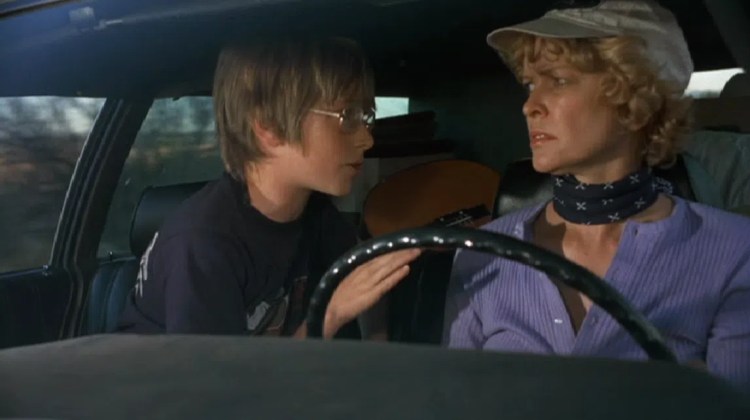
To be sure, Alice Doesn’t Live Here Anymore devotes much of its narrative to the strained but always affectionate relationship between the title lead character (played brilliantly by Ellen Burstyn) and her son Tommy (Alfred Lutter). Concerning this relationship, the film is full of wonderfully particular observations: for example, one comic scene depicts Tommy repeatedly explaining a joke from the passenger seat until his mother breaks into tears behind the wheel. The film is full of such episodes, which play frequently as comedy but amount to an attentive study of behaviour within a specific mother-son dynamic. Indeed, the film is constructed dutifully around a series of such interpersonal connections. While Alice and Tommy figure at the center, the film navigates Alice’s relationships with romantic interests and coworkers, and even takes time to explore the budding friendship between Tommy and a young girl named Audrey (Jodie Foster). The connections build with an organic quality that does recall the aforementioned Cassavetes, carrying the narrative by virtue of a seemingly effortless development of conflict.
By 1974, the notion of toxic masculinity had not yet revealed itself as a career-long obsession for Scorsese, but it is fascinating now to look at Alice Doesn’t Live Here Anymore retrospectively. Certainly, Mean Streets (1973) concerns itself largely with socially-dictated codes of violence, and with culturally normalized “masculine” behaviour at large. However, Scorsese’s ultimately damning study of toxic masculinity doesn’t make itself completely clear until the cumulative effect of his later releases: I’m thinking specifically of works like Taxi Driver (1976), Casino (1995), The Wolf of Wall Street (2013) and especially Raging Bull (1980) (to name a handful among many).
All of those titles concern themselves with an intensive and often excruciating expression of violent psychology, albeit with insular worldviews that befit their protagonists. When Jake LaMotta (Robert De Niro) of Raging Bull allows his abusive impulses to reach their most horrifying climaxes, family members and onlookers remain in the background. The film’s form, then, reflects the obsessive focus of its subject, and therefore both the abused wife and bystanders are left largely unexplored. The same might be said for a later work like The Wolf of Wall Street, which finds an extraordinarily vexing interplay between comedy and disgust when protagonist Jordan Belfort (Leonardo DiCaprio) and unhinged associate Donnie Azoff (Jonah Hill) fight in a fiendish Quaalude haze on Belfort’s kitchen floor. The struggle plays out as outrageous physical comedy, but Scorsese and editor Thelma Schoonmaker skillfully cut images of Belfort’s horrified young daughter amidst the madcap imagery. Indeed, while Scorsese has always concerned himself most with the self-destructive effects of violent men, he has also demonstrated a consistent awareness of the domestic and social terror that such men cause.

However, it is only in Alice Doesn’t Live Here Anymore that the filmmaker lends sustained attention to the experience of a woman who has survived multiple abusive relationships. Burstyn’s characterization and performance drive the picture more than anything else, and the narrative offers vital perspective into the exhausting lifestyle of a working, single mother who’s stuck in a society driven by oppressively patriarchal standards. As is the case with most of Scorsese’s work, the film defines itself with the overall effect of individual moments rather than with rigorous plotting. The most indelible scenes arise often from thoughtful insights into characters’ experiences. With that in mind, Alice Doesn’t Live Here Anymore finds its way into my memory with a number of such scenes. Consider, for instance, one sustained medium shot that depicts Alice weeping inside her car, which the director sensitively attributes with quiet intimacy. The car’s windows are sealed, and viewers are not invited entirely into this intimate moment: Alice’s crying is muted. The dissonance between formal distance and this personal expression of pain plays out with pure affect: the scene reads as a genuine and thoughtfully composed portrait of empathy.
The second scene that resonates with me is a dialogue between Alice and her coworker Flo (Diane Ladd), which occurs near the end of the film. While maintaining focus on the particularity of Alice’s experience, Scorsese includes a line that speaks to the film’s larger social questions, and (retrospectively) to the auteur’s filmography-long concerns. Alice makes an admission that while she was always afraid of her abusive first husband, Donald, she simultaneously “always felt that he was taking care of her.” She states also that she “doesn’t know how to live without a man.” To be sure, Alice’s thoughts in this scene reflect her individual experiences, but they also gesture to the socialized conditions that prioritize the presence of a patriarchal figure, regardless of the damage that such a figure so often inflicts.
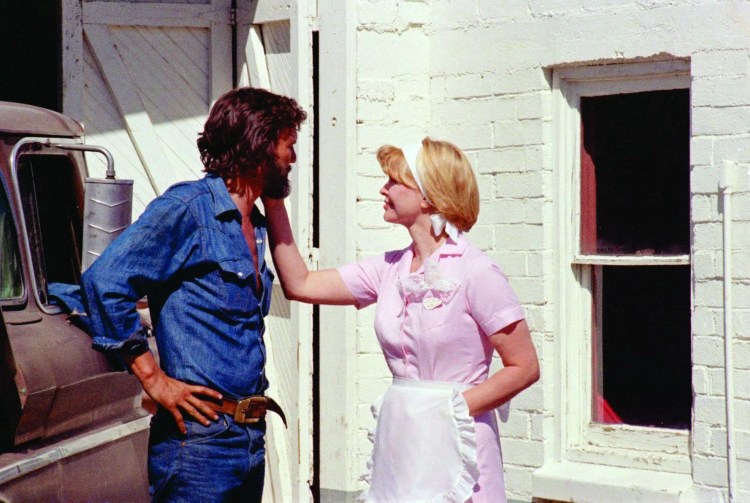
The film doesn’t resign itself to a tidy message or ideal, but instead finds Alice ultimately reconciling with her most recent boyfriend, David (Kris Kristofferson). Given that David lashes out in an earlier scene, spanking Alice’s son, this conclusion is less than picture perfect. However, the film follows a pattern characteristic of Scorsese’s entire filmography, in the sense that it concerns itself with an attempt at the “authentic” study of human behaviour. That the auteur often codes this search for authenticity within the armature of genre and cinematic reference only serves to enrich and deepen his work. The cumulative effect of Alice Doesn’t Live Here Anymore is one of openness and warmth. For its distinct sensitivity alone, it deserves recognition as a standout from its celebrated director.
Mike Thorn (@MikeThornWrites) is a lifelong cinema enthusiast pursuing his M.A. in English literature at the University of Calgary. His fiction has appeared in a number of publications, including DarkFuse, Double Feature Magazine, Turn to Ash and the anthology Creepy Campfire Stories (for Grownups). He has also written numerous articles for Bright Lights Film Journal. You can contact him through his website, mikethornwrites.com.
Categories: 2017 Film Essays, Featured, Film Essays
Reblogged this on Mike Thorn.