
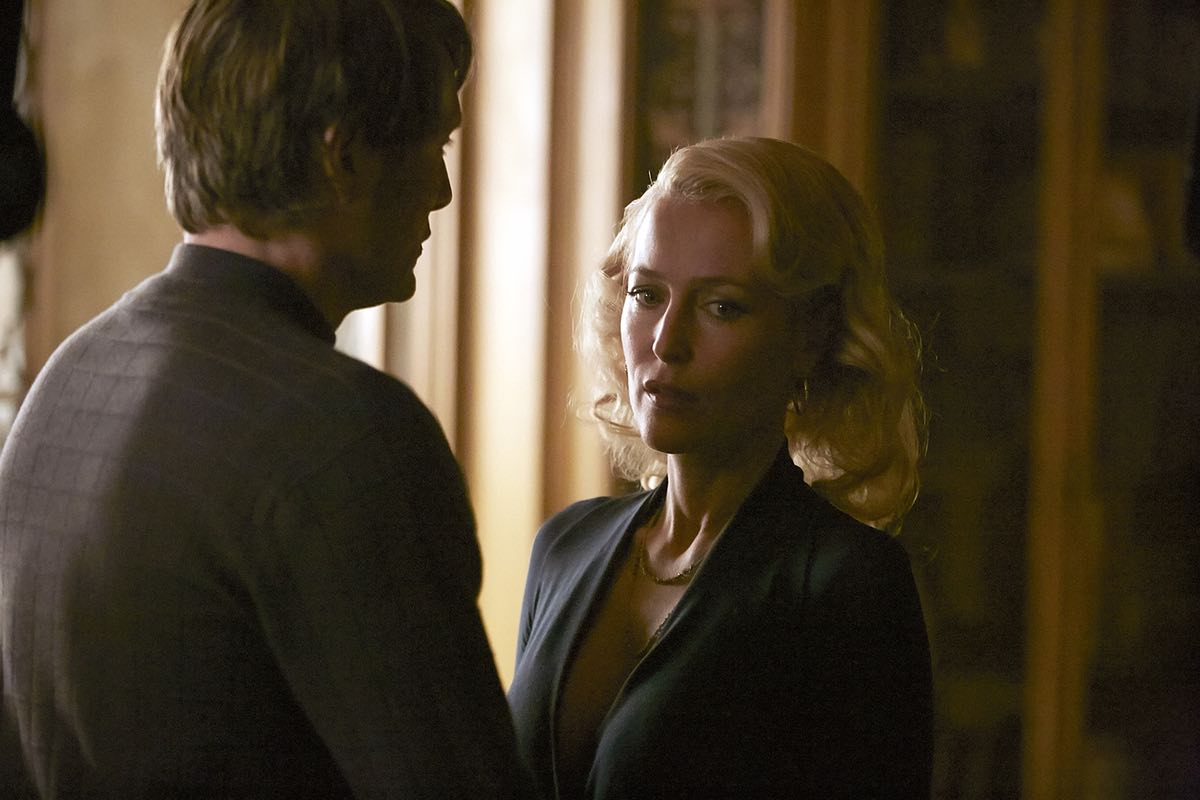
(Photo by: Ian Watson/NBC)
After the unwelcome news about the Hannibal actors being released from their contracts, making the show’s future seem all the murkier, there’s something beautiful about what we got this week: an all-out display of what the show does best, and a rejection of what any network executive would say it “should” look like. Even in its formulaic, Monster of the Week-based first season, Hannibal seemed more indebted to arthouse cinema than to The X-Files, but the series hasn’t always felt totally like the avant-garde serial killer show Bryan Fuller aspires towards. In particular, the first two episodes after NBC’s announcement of the show’s cancellation didn’t seem to be doing all they could to make the network regret their decision.
But the negative trend changes with “Dolce,” which combines compelling narrative momentum with gorgeous artistry for the most riveting episode of the season thus far. And it’s not like the artistry is just there to look pretty: the theme of forgiveness, harped on verbally again and again throughout the season, becomes visualized by the shot of Hannibal having the blood washed off of him. The image of him in the bathtub recalls Bedelia in the same position earlier in the season, suggesting that he’s become like her. The emphasis on her power continues with the shot of the scissors, which then cuts to show that she’s the one holding them (rather than Hannibal). By holding the weapon, she’s gained the control Hannibal craves.
Still, even if the tables have turned, it’s not as if Hannibal hasn’t left his mark on her. The animal metaphors throughout her conversation with Chiyo suggest that they see themselves as “the rude” in the way he’s intended. Hannibal has dehumanized them (and everyone else), and their language reveals how they’ve internalized his disdain.
His influence over Bedelia keeps being explored as she willingly injects the drug he gave to Miriam Lass. In addition to showing the extent of her submission to his desires, the scene provides the opportunity for some gorgeous extreme close-ups on her pupils as she feels the effects of the drug, reminiscent of the depiction of drug consumption in Requiem for a Dream. The disorienting imagery continues with the out-of-focus close-ups on Will and Jack’s faces, giving us the scene through Bedelia’s drug-addled eyes.
And as director Vincenzo Natali shows us later on in the episode, the extreme close-ups can be just as effective for showing other overpowering feelings. Although the sex between Alana and Margot gets obscured by the focus on specific parts of their bodies, the blending of the two creates yonic imagery which makes it clear exactly what’s going on. In part, the choice feels like a concession to network restrictions, but it also emphasizes the connection between the two women: their shared desires for revenge have brought them together. As with Bedelia and Hannibal, they’ve become united by their increasing resemblance of one another.
“Dolce” also doesn’t forget about the show’s first couple whose members resemble one another: Hannibal and Will. In referring to periods of his life as “before you and after you,” Will’s rhetoric makes the Christ imagery Hannibal has been playing with this season explicit (remember how Will arranged Chiyo’s victim?). Perhaps the water from the beginning of the episode points more towards resurrection than forgiveness, and if the rest of the season is as strong as “Dolce,” one can only hope Hannibal‘s fate will point in the same way.
Max Bledstein (@mbled210) is a Montreal-based writer, musician and world-renowned curmudgeon. He writes on all things culture for a variety of fine North American publications. His highly anticipated debut novel will write itself one of these days, he assumes.
Categories: Uncategorized
You must be logged in to post a comment.