
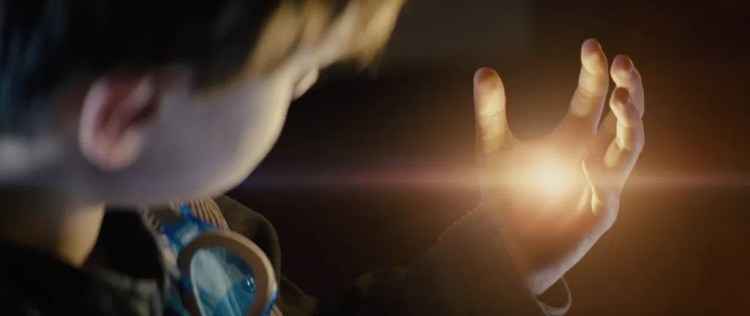
Yesterday saw the release of the first trailer for Midnight Special, the latest film from American independent auteur Jeff Nichols, and rather singing its praises as my most anticipated film of 2016, I’m going to examine what the film stands for in the grand scheme of things.
Midnight Special represents a rarity in modern studio filmmaking. With a mid-level Hollywood budget, genre/blockbuster appeal and a personal vibe, the film stands to mirror the spirit of Rian Johnson’s 2012 film, Looper — a stunning example of what happens when an independent filmmaker receives the budget to match their ambition. Such middle-class studio filmmaking has become all too rare in the oversaturated landscape of superhero films, shared universes and never-ending franchises, and just as the middle class continues to vanish from the current American economy, the middle class studio film drifts away as well.

It’s an appropriate role for Nichols to represent, as few filmmakers have an authentic understanding and cinematic display of working class life. In each of Nichols’ past films, the main characters are people who work for a living and constantly struggle to get by — a determining factor in the storytelling. Take Shelter (2011) emphatically displays this quality, as much of the tension and dread comes from the economic hardships of working in modern America and receiving decent healthcare.
In the realm of young filmmakers experiencing immediate success, Nichols serves as the rare exception — someone who managed to wait until his fourth film to work with a studio and managed to make his own film. In essence, he represents the desired crescendo into a studio film rather than an abrupt drop. Nowadays, when a young filmmaker has a breakout film, they don’t always have the option to make another personal project in collaboration with a studio. “Do I take this studio franchise gig that will consume the next three or fours years of my life but will allow me to pay my bills without any trouble? Or do I put my financial stability on hold and risk my entire livelihood again to get another one of my own films made?”

For example, look at Jon Watts. His 2015 film Cop Car was my favorite movie at Sundance, and I eagerly awaited news on what he would do next. A few months later, he signed on to direct the second reboot of the Spider-Man films. I can’t begrudge Watts a paycheck, but I wanted him to be able to make another “Jon Watts” film, and it’s unlikely that he’ll get to do that with Spider-Man. Other negative examples include Josh Trank jumping from a $12 million film (Chronicle) to a bloated $120 million film (Fantastic Four) that has seemingly ended his career. Marc Webb similarly went from the $7.5 million (500) Days of Summer to the massive and all-consuming Amazing Spider-Man films, and his career massively suffered from the box office disappointments. It’s no coincidence that the aforementioned career-damning films were superhero tales.
However, don’t let the good examples of rushing into a blockbuster be forgotten. Gareth Edwards followed his micro-budget Monsters with the gargantuan Godzilla reboot and succeeded. His upcoming film takes places in the Star Wars universe with Rogue One and next to Rian Johnson with Episode VIII. Then you have filmmakers like Nichols and fellow American filmmaker Jeremy Saulnier (Blue Ruin and next year’s Green Room) who waved off studio films after breaking through in order to continue making personal films. Even more admirable about the career arc of Nichols, he’s following up Midnight Special with another independent film, the period romance Loving.
If Midnight Special does well in March, the film will undoubtedly encourage an environment in which middle-class studio releases aren’t such a rarity, because the film world needs more working class heroes like Jeff Nichols.
Dylan Moses Griffin has been a cinephile for as long as he can remember. His favorite film is Taxi Driver, and he reads the works of Roger Ebert like it’s scripture. If you want, he will talk to you for 30 minutes about the chronologically weird/amazing Fast and Furious franchise.
You must be logged in to post a comment.