
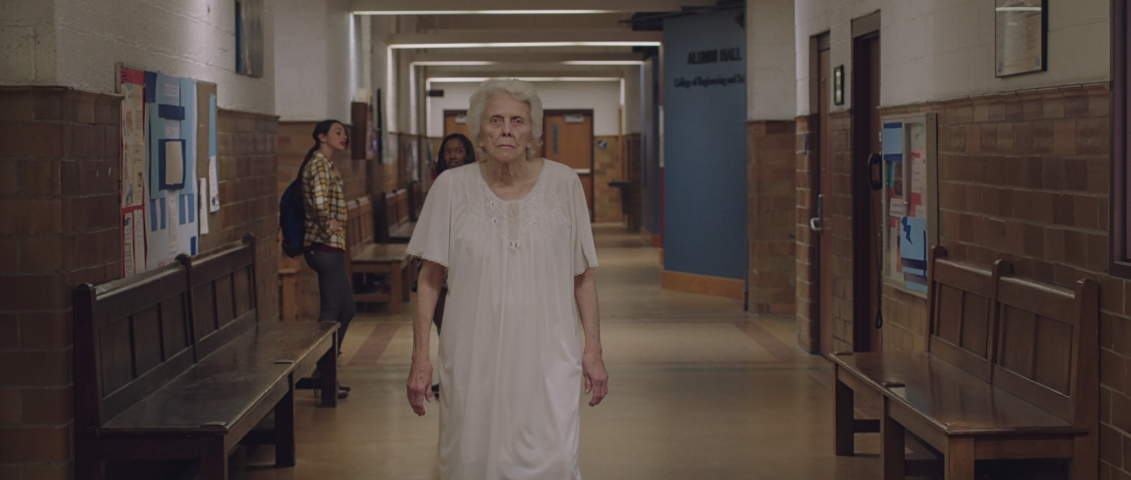
When I first saw David Robert Mitchell’s It Follows at Sundance, it was like being held in a stranglehold of fear for an hour and a half. The entire audience was just writhing in their seats, as we couldn’t escape the sense of fear and horror that this film was putting on. We were trapped, and we were helpless. It’s not just the fact that It Follows revolves around a supernatural entity that slowly walks towards you after you’ve contracted an STD, that it can look like anyone and that it can’t be killed, that the only way to get rid of it was to pass it on, it was the way that the filmmakers subtly reinforced this sense of paranoia in the audience. Moments of calm and levity play out with an asterisk that inevitable danger is right around the corner. Cinematically, It Follows literalizes the phrase “You can run, but you can’t hide.” The effectiveness of it all boils down to one simple but integral notion by Mitchell and cinematographer Mike Gioulakis: the camera consistently produces the feeling of watching or of being watched.
Consider the opening scene, as a girl bursts out of her house in a long tracking shot. She moves in a circular pattern around the street before running back inside, grabbing the keys to the car and driving off. The camera has a predatory nature here, tracking her just as much as the nameless demon. The absence of edits subtly reinforce the tension at play, while the bonkers electronic score from Disasterpeace heightens the danger.

The girl waits on a beach, watching as something, someone, approaches her. The camera adopts her point of view, but we don’t see what she sees, and that’s way more terrifying. Mitchell invites the viewer to scan the screen for whatever this character is running from, but you can’t see it. Not yet. The next shot finds the girl mangled. That’s how It Follows begins, and it only gets more terrifying from there.
There’s a healthy serving of playful foreshadowing early on. Consider the scene where Kelly, Paul and Yara play “Old Maid” with each other before Jay gets dumped on her street after contracting the STD. Two small neighborhood boys like to watch Jay while she swims, but she catches them and playfully remarks “I see you!” While in line for a movie, Jay and Hugh play a people-watching game. It’s all a cheeky nod of things to come.
Even when we are first introduced to Jay as she climbs into her backyard pool, the shot still feels predatory in an otherwise calm moment as the camera tracks across the house to the backyard and then zooms in on the girl. It’s a surveillance type effect, giving the impression that Jay is being watched. She’s not in danger yet, but it’s waiting around the corner.
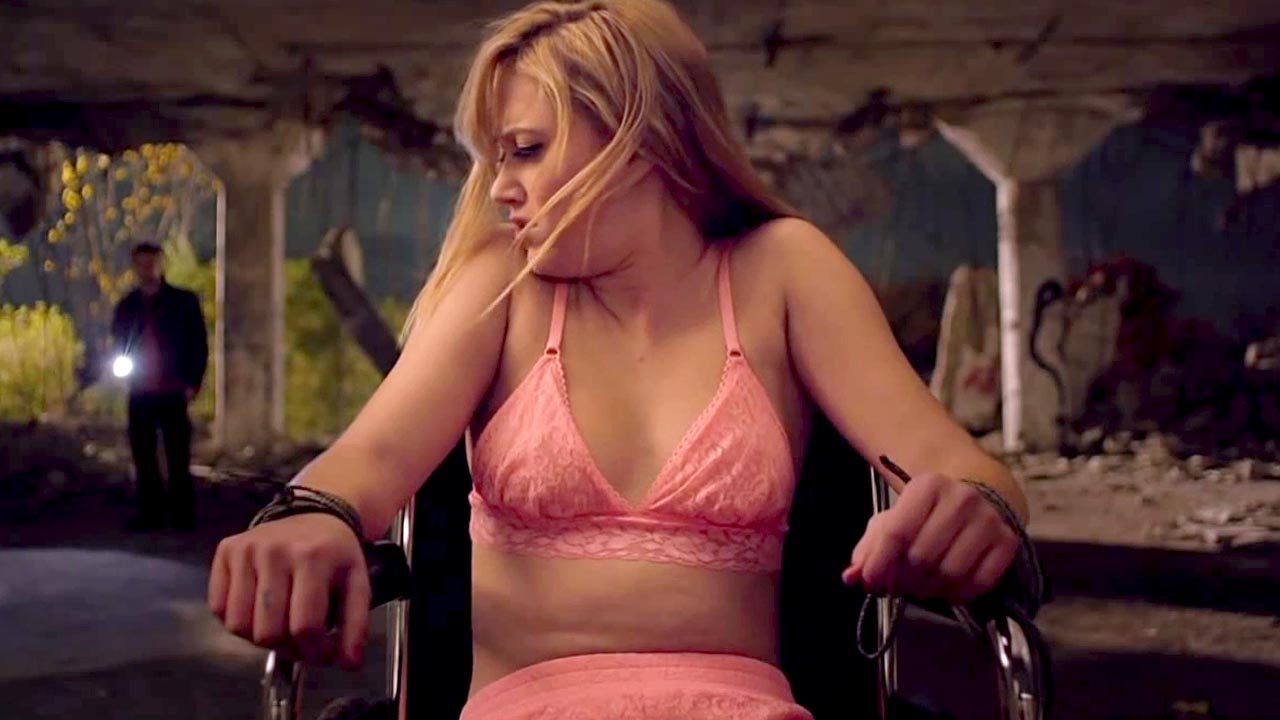
When Jay awakens tied in a wheelchair, much of the ensuing scene has the camera in a fixed position, facing the victim head on. When Hugh pushes the wheelchair, the camera stays attached, resulting in jittery footage that heightens the tension. The shots of the creature approaching (a frighteningly naked woman) hold their position, creating the feeling of inescapability. It’s coming for you, and there’s no escape.
It Follows will frequently play with the notion of the demon walking towards the camera, which is terrifying enough on its own given the premise, but it’s made even more terrifying because the film alternates between confirmation and ambiguity in letting the audience know whether or not the figure is the demon. In the scene where the group sits in Hugh’s backyard, a figure approaches across a soccer field and Hugh panics. He asks if they see that figure, and they do as “she” walks by them. It’s a sort of comedic moment that sees its release out of the building tension. Also, when they all hang out on the beach at Greg’s cabin, a figure approaches from behind in the distance, but as Yara has not been accounted for yet, we want to assume it’s her. Then she paddles her way on a donut tube into the frame, confirming our fears. It’s not her that’s approaching.
There are repeated scenes where the camera will slowly swivel around in a fixed position, and in the process, the viewer begins to see somebody slowly making its way towards the camera. Each round of the visual circling is more anxiety-inducing as the figure has become closer with each pass. Again, it’s difficult to be certain if the approaching figures are friendly or not, and that makes the shots even more frightful.
As I left the theater after the Sundance screening (at 2 a.m. in the morning and freezing cold), I kept looking over my shoulder as I made my way to the car. The final shot of It Follows had me paranoid, the perfect exclamation point to the film’s sense of distrust and danger.
Dylan Moses Griffin has been a cinephile for as long as he can remember. His favorite film is Taxi Driver, and he reads the works of Roger Ebert like it’s scripture. If you want, he will talk to you for 30 minutes about the chronologically weird/amazing Fast and Furious franchise.
You must be logged in to post a comment.