
In John Lasseter’s recent Medium article “Technology and the Evolution of Storytelling,” he offers up some sage advice on incorporating state-of-the-art techniques into one’s story. “It’s important, I believe, to make the technology invisible, but have it push to do something new,” he says. “Your goal as a filmmaker is to entertain. And to entertain people is about story. It’s about characters. It’s about connecting with that audience.”
He certainly understands that connection. Much of the speech concerns his feature directorial debut Toy Story, which, besides being the first computer-animated feature film, was a critical and commercial success that inspired two sequels (with a third in the works) and was inducted into the National Film Registry in its first year of eligibility.
I buried Toy Story’s technological innovations in the middle of the last sentence with good reason: they’re among the least important parts of the film. Particularly given the dominance of computer animation after Toy Story’s triumph, its use of technology is far from what stands out the most about the film (it’s certainly not the reason there’s going to be a Toy Story 4). Rather, what makes Toy Story an unforgettable movie is the relationship between Buzz and Woody, Andy’s connection to his toys and the thrilling quest to complete their hero’s journey and find their way home.
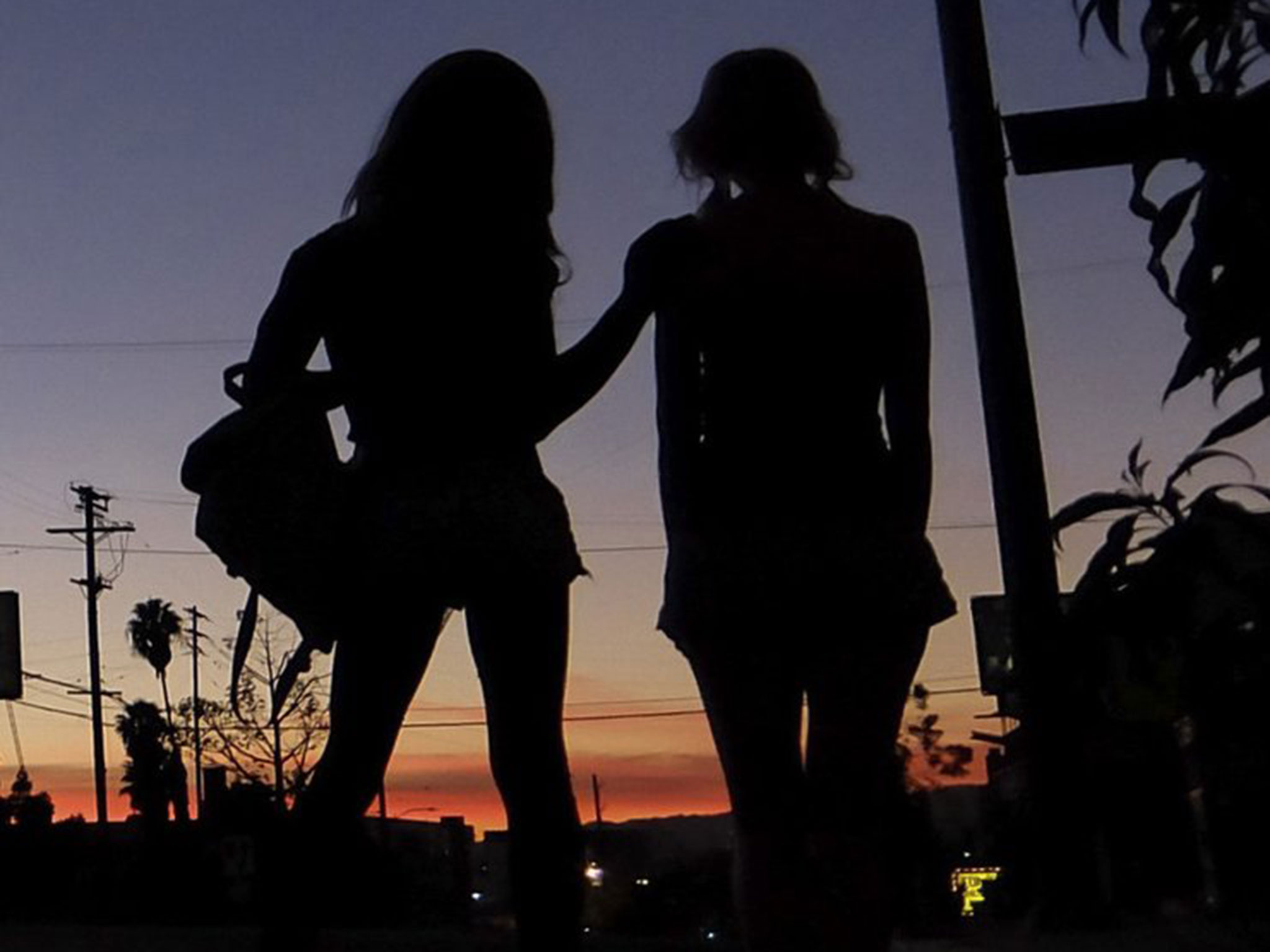
This is all to introduce my discussion of the greatness of a film which uses quite a different technological innovation: Sean Baker’s Tangerine. As you’ve probably heard by now, Baker shot the entire film on iPhone 5s, and while the initial decision came from budgetary constraints, the result is a cinematic technique which perfectly suits his subject matter. The film concerns the lives of transgender prostitutes in the sordid streets of Hollywood, and Baker’s mobile lenses do a beautiful job of showcasing both the environment and the vibrant personalities who inhabit it.

I’ll start with the environment. As many times as L.A. has been captured on film, it’s never been depicted quite the way it is in Tangerine, and the iPhone is a big reason why. Baker was initially inspired to make the film by the donut shop near his house where the story’s climactic action takes place, and the iPhone feels like the perfect medium for capturing the humble store. Donut Time doesn’t seem like the sort of place one would expect to see through a high-end lens, and Tangerine respects this by not showing it through one. The same is true for touches such as the “No Prostitution Allowed” sign on a rundown motel, which functions as a harsh taste of reality in an ostensibly fictional film. Elements such as these move Tangerine into being as much a depiction of the harsh environment which serves as its setting as it is the story of the fictional characters at its core.
Not that these characters risk being overshadowed in the slightest. The protagonists, Sin-Dee (Kitana Kiki Rodriguez) and Alexandra (Mya Taylor), are fast-talking, vulgar and have larger-than-life personalities. While depicting a cisgender man doesn’t seem nearly as revolutionary as telling the story of transgender women of color, immigrant cab drivers with a taste for transgender prostitutes haven’t exactly received a ton of screen time either, and Razmik’s presence (Karren Karagulian) in Tangerine is a welcome one. As with the film’s setting, the types of people who make up its ensemble haven’t been shown much onscreen through more expensive lenses, and the iPhone cinematography is a helpful reminder of that fact. Not only does Tangerine depict the underrepresented groups, but the intimacy of the iPhone brings the viewer up close and personal with them.
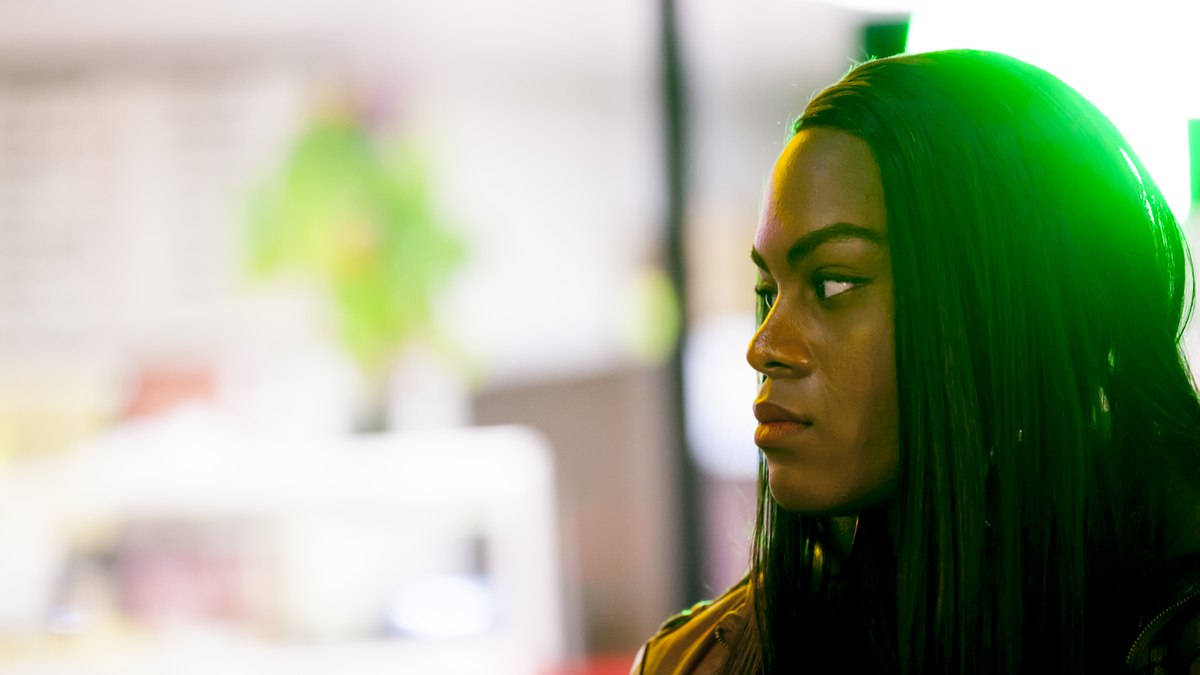
Most importantly, these feelings of intimacy are all one thinks about when watching Tangerine, rather than how they’re achieved. The film’s use of technology is “invisible,” as Lasseter says it should be, and it serves as a medium for telling a story rather than being the story itself. In Lasseter’s article, he describes fearing Disney marketing Toy Story as the first CG film, since he wanted it to just be marketed as a film (which happened to be made using CG), and his desire to keep the focus on the narrative rather than the technology bears a strong resemblance to Baker’s desire to keep the iPhone cinematography a secret until after the film premiered. In both cases, the filmmakers cared much more about the stories and people in their films than how they were told, and they hoped for viewers to have similar priorities. The medium is not the message, say Baker and Lasseter, and their films have found the audiences they have due to the filmmakers’ desires.
As more and more films use computer generation, iPhone photography and other modern techniques, the most important cinematic tools continue to be story and character. In Toy Story and Tangerine, these tools are amplified by contemporary technology, but it never overwhelms the aspects of the films which make audiences care about them the most. Tangerine is a great film shot on an iPhone (just as Toy Story was a great film made on computers), and neither should be referred to the other way around.
Max Bledstein (@mbled210) is a Montreal-based writer, musician and world-renowned curmudgeon. He writes on all things culture for a variety of fine North American publications. His highly anticipated debut novel will write itself one of these days, he assumes.
Categories: 2015 Film Essays, Film Essays
You must be logged in to post a comment.