
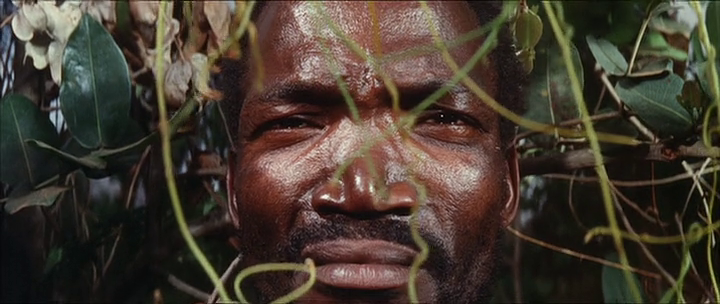
Something strange occurred to me as I watched Cornel Wilde’s The Naked Prey last week, and it took quite a while for me to realize it – where were the subtitles? I don’t mean that as a bad thing, I was just taken by surprise how bold the film was in avoiding subtitles for its native African dialogue passages, and how much it didn’t even need them to communicate what these characters were saying. Nothing was lost despite the lack of subtitles.
The Naked Prey follows a nameless big game hunter (Wilde) leading a safari in 19th century Africa whose party gets captured and tortured by a local tribe after offending them by not offering a gift. Only Wilde’s character is released by the tribe to be hunted by them for sport.

There’s plenty to be written (and should be written) about how problematic the film’s portrayal of its African characters are, but The Naked Prey does enough cinematically to make the film noteworthy. The shots of the African landscape are certainly ambitious and well captured, Wilde’s physicality in his performance is admirable, and screenwriters Clint Johnston and Don Peters make an interesting choice by inserting a climactic chase into the plot and making it about the characters’ ideals rather than for popcorn value. But what really makes The Naked Prey worth discussing (and what surprised me) was the choice by Wilde to not have subtitles. If you’re going to show your film to an American audience, you’re going to have subtitles for any non-English language spoken, as that’s how it’s always been. Sometimes, if it’s just a few words, you won’t bother subtitling it, but anything past a sentence or two gets translated in print at the bottom of the screen.
That sort of trust in the communicative power of the image just doesn’t happen like that anymore. It would be a bold move today to try to get a large audience to cooperate with it, so I can only imagine what it was like 50 years ago. The closest thing I can think of in recent cinema is how much exposition is delivered in subtitled Russian dialogue in this month’s The Man from U.N.C.L.E, directed by Guy Ritchie.
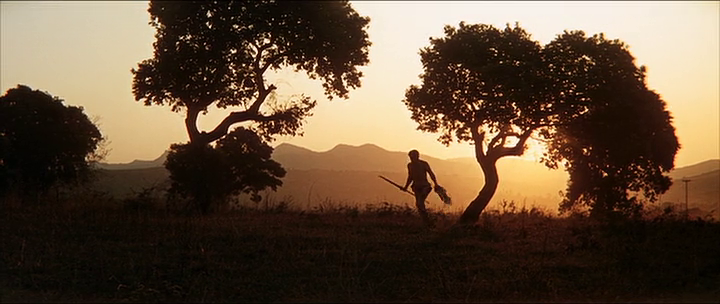
What these non-subtitle passages exemplify at their base is the raw communicative power of the image in cinema. One of the most distinguished things about film as an art form is the use of the moving image to tell a story and inform. In its own way, The Naked Prey is a prime example of how that’s done. When the leader of the tribe’s hunters gives orders, you can infer quite easily what they are. What the tribe’s king tells his people what to do with each of their captives is never questioned by the audience, because the emotions of the performances and informative direction give you what you need to know. Wilde and his cast let you fill in the gaps of language by allowing you enough visual information. The Naked Prey has its problems, but the confidence it has in the communication of its visuals and performances is something that you just don’t see anymore and explains why Criterion picked this one up.
Dylan Moses Griffin has been a cinephile for as long as he can remember. His favorite film is Taxi Driver, and he reads the works of Roger Ebert like it’s scripture. If you want, he will talk to you for 30 minutes about the chronologically weird/amazing Fast and Furious franchise.
You must be logged in to post a comment.